10% discount  on ceiling lights and floor lights
Code: LIGHT
Save now
info

Stimulating vs. soothing lighting: Which type of light makes you feel tired?

 
x-com
pinterest
whatsapp
mail-arrow
Stimulating vs. soothing lighting: Which type of light makes you feel tired?
 

Light has a major influence on whether we feel tired or face the day’s tasks feeling focused and alert. Whilst it is ideal for the light color to put us in a relaxed mood before going to sleep, lighting with a stimulating effect is important for work – whether in the office or working from home – to ensure concentration.

Below, we explain why light is important for our circadian rhythm and thus affects our mood and sleep, what the difference is between light color and colour temperature, and give you tips for lighting that doesn’t make you tired.

Warmweiße Beleuchtung am Schreibtisch
Neutralweiße Beleuchtung am Schreibtisch

The influence of light color on the circadian rhythm

You’ve probably noticed that sunlight fills you with energy, whilst the darker months of the year tend to put you in a calm and cosy mood. This is linked to your biological rhythm, also known as the human ‘internal clock’. This makes a particular difference to your body – even, or perhaps especially, if you spend most of your time indoors.

  • Sunlight, or daylight, has the highest proportion of blue light and sets the rhythm. To the human eye, this light does not look “blue”; it is bright, white and stimulating, signalling to us that it is daytime and we should be awake.
  • Towards evening, the proportion of blue light decreases, whilst the proportion of orange light increases. This affects your tiredness and triggers the release of the sleep hormone melatonin.
  • If you spend a lot of time in front of a screen before bed and are therefore exposed to blue light, this can affect the quality of your sleep.

The light color changes throughout the day, from morning through midday to evening, shifting from daylight white to neutral white and then to warm white.

Definition of light color and colour temperature

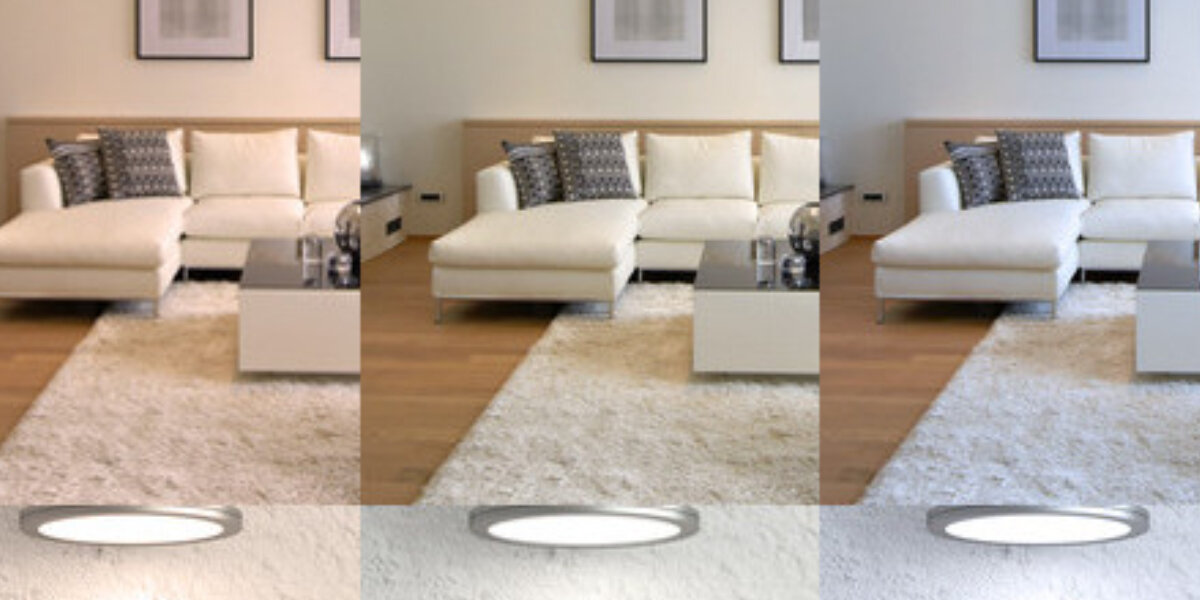
Light color describes the visible colour of the light, whilst colour temperature indicates the relative warmth or coolness of the light. Colour temperature is measured in Kelvin.

  • Warm light color with a low Kelvin value (0 to 3,300 Kelvin) has a high proportion of orange light,
  • whilst cooler light colors, represented by a higher Kelvin value (between 3,300 and 5,300 Kelvin or above 5,300 Kelvin), contain a high proportion of blue.
Warm light color
Warm light color
Cool light color
Cool light color

What is the difference between this and brightness?

Brightness, which is specified in lumens for LED bulbs, indicates the maximum luminosity of the light bulb. It can, for example, be reduced as required in Dimmable bulbs. However, this does not alter the light color.

LED bulbs with adjustable light color

When it comes to light color, the following applies to light bulbs: the higher the Kelvin value, the higher the proportion of blue. So it’s not just the dark season that makes you feel tired and listless compared to the warmer months – the choice of LED light bulbs in your home also plays a crucial role when it comes to keeping you alert or creating a pleasant, cosy atmosphere.

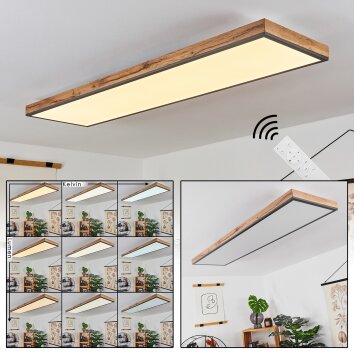
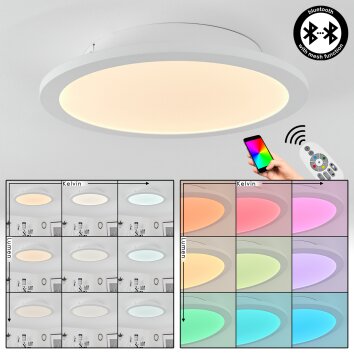
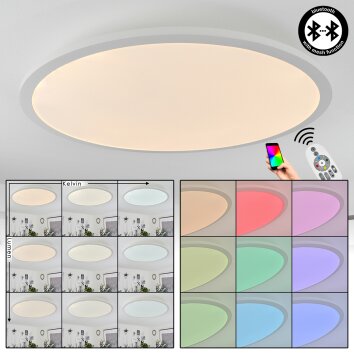
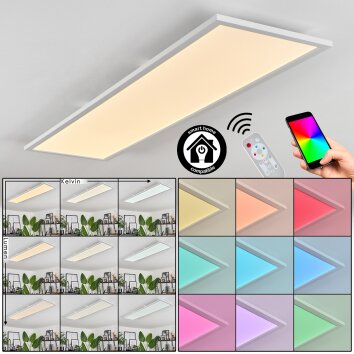
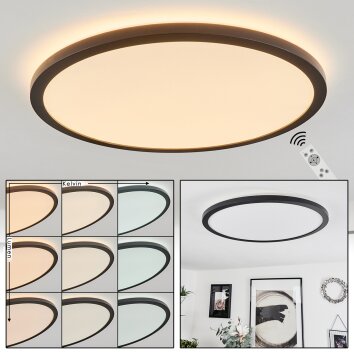
With LED bulbs or lights with integrated light bulbs, such as LED panels, adjusting the light color and colour temperature allows you to adapt the lighting to different situations and needs. This means you can influence your mood at home with the right lighting.

Tips for lighting that doesn’t make you tired

Our tips can help you create pleasant, eye-friendly lighting that doesn’t make you tired. Always take your individual needs and preferences into account and adapt the lighting tips to your personal requirements:

  • Prioritise natural light: Try to let as much natural daylight into the room as possible. This can be achieved through large windows, light-coloured curtains or glass panels in the doors.
  • Consider colour temperature and light color: For your study, avoid using light bulbs with a warm white light color; instead, choose light bulbs with a high proportion of blue light for working. Before going to bed, however, you should opt for warm white lighting in the living room and bedroom – because that is precisely when light serves the purpose of making you sleepy.
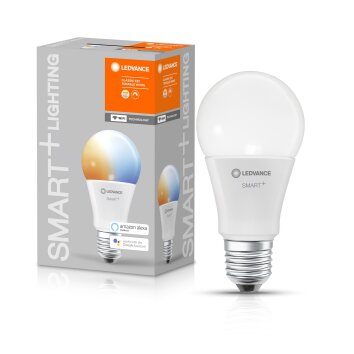
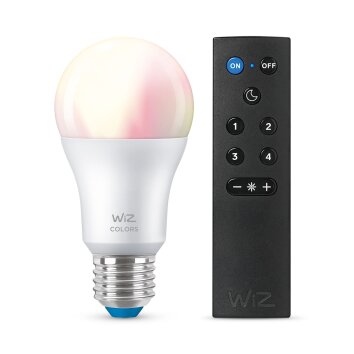
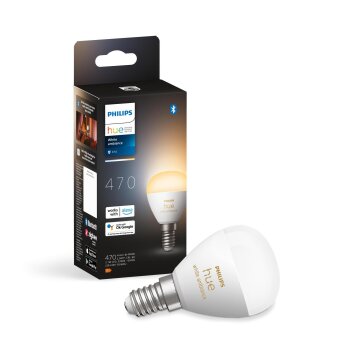
  • Use smart light bulbs: Use smart light bulbs and LED bulbs with color changing features and adjustable light colors.
  • Avoid glare: Avoid direct glare from lamps or lamps shining directly into your eyes. Position your lamps so that they distribute the light indirectly or direct the beam specifically onto an area, such as your desk. Uplighters or adjustable, swivelling lamps are suitable for this, for example.
  • Use multiple light sources: Combine different light sources in the room, such as ceiling lights, floor lights and table lamps, and adjust the brightness and light color to suit the atmosphere and your needs.

Popular Articles

Latest Articles